


Global Cocoa Market: Stabilizing After Historic Highs, But Uncertainty Remains
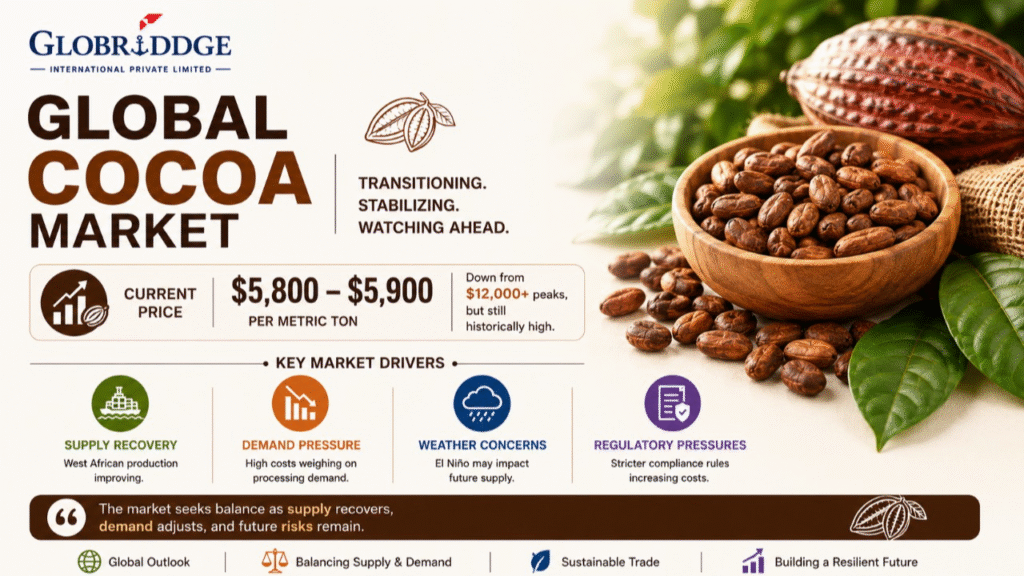
After experiencing one of the most dramatic price surges in its history, the global cocoa market is beginning to stabilize. Cocoa prices, which recently crossed $12,000 per metric ton, have now eased to around $5,800–$5,900 per metric ton. While this represents a significant decline from record highs, prices remain well above historical averages, indicating that the market is still adjusting to changing global supply and demand dynamics.
One of the primary reasons behind the price correction is the recovery in cocoa production across West Africa, the region responsible for nearly 70% of the world’s cocoa supply. Improved weather conditions and stronger harvests in key producing countries have helped increase global availability, reducing the severe supply shortages that pushed prices to unprecedented levels. As production improves, the market is gradually finding a healthier balance between supply and demand.
On the demand side, however, high cocoa prices continue to affect the industry. Chocolate manufacturers and cocoa processors are facing higher raw material costs, leading many businesses to reduce purchases, optimize production, or explore alternative ingredients where possible. This softer demand has also contributed to easing prices, although consumption remains resilient in many premium chocolate markets.
Despite the improving outlook, several risks continue to influence the cocoa market. Weather remains one of the biggest uncertainties, with the potential impact of El Niño posing a threat to future harvests. Unpredictable rainfall patterns, drought conditions, or excessive heat could once again disrupt production and tighten global supplies. As a result, traders, exporters, and manufacturers continue to monitor climate developments closely.
In addition to weather-related challenges, regulatory requirements are becoming increasingly important in international cocoa trade. Governments and major importing regions are implementing stricter sustainability, traceability, and environmental compliance standards. While these measures promote responsible sourcing and long-term sustainability, they also increase production and compliance costs for exporters and processors, adding another layer of complexity to the market.
Looking ahead, the cocoa industry appears to be entering a transition phase where supply recovery, moderating demand, climate risks, and evolving regulations will collectively determine future price movements. Rather than returning to previous low-price levels, the market is expected to remain relatively firm as participants adapt to a new trading environment shaped by sustainability, resilience, and responsible sourcing.
At Globriddge International Private Limited, we understand that staying ahead of global commodity trends is essential for making informed business decisions. Our team continuously tracks international market developments to help importers, exporters, and businesses navigate changing trade conditions with confidence. Whether you’re sourcing premium agricultural commodities, managing global supply chains, or exploring new international markets, Globriddge is committed to delivering reliable, transparent, and efficient trade solutions that support long-term business growth.
#globalcocoamarket #cocoa #cocoaprices #commoditymarket #globaltrade #importexport #agriculturalcommodities #cocoatrade #supplychain #westafrica #elnino #sustainability #foodindustry #chocolateindustry #exportbusiness #internationaltrade #marketinsights #tradeupdates #globriddge #businessgrowth

Leave a Reply