


India Struggles to Build Onion Buffer Stock Despite Repeated Price Hikes
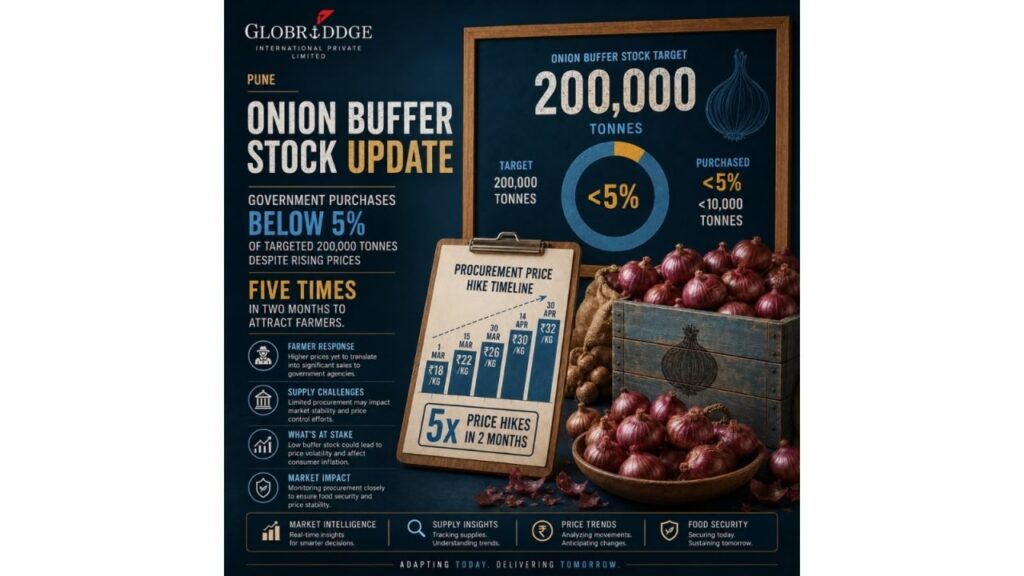
India’s efforts to strengthen its onion buffer stock are facing a major challenge, with government procurement remaining significantly below target despite multiple increases in procurement prices. The slow pace of purchases has raised concerns about the country’s preparedness to manage onion price volatility and ensure stable supplies during the lean season.
The Centre has set a target of procuring 200,000 tonnes of onions for its strategic buffer stock. However, as of early July 2026, government agencies have managed to procure less than 5% of the target, highlighting the gap between policy measures and market response. Buffer stocks play a crucial role in stabilizing retail prices by releasing onions into the market during periods of shortage or sharp price increases.
To encourage farmers to sell their produce, the government has revised procurement prices five times within two months, with the latest increase raising the procurement price by 13% to ₹2,125 per quintal, effective from July 4, 2026. Despite these successive revisions, procurement has remained sluggish, indicating that farmers continue to find open market prices or other selling channels more attractive.
Several factors have contributed to the weak procurement. Delayed monsoon conditions, expectations of higher market prices, and farmers’ preference for selling through Agricultural Produce Market Committees (APMCs) rather than government agencies have limited participation in the procurement programme. As a result, agencies such as NAFED and NCCF have struggled to build adequate stocks for future market intervention.
A lower-than-planned buffer stock could have significant implications for India’s food supply chain. Without sufficient reserves, the government may find it difficult to intervene effectively during periods of supply disruption or seasonal shortages, increasing the risk of retail price spikes and food inflation. Maintaining an adequate onion buffer stock remains an important component of India’s price stabilization strategy and consumer protection measures.
For exporters, wholesalers, retailers, and food processors, the current situation signals the importance of closely monitoring procurement trends, weather conditions, and domestic supply dynamics. Any prolonged shortfall in government procurement could influence onion availability, domestic pricing, and export policies in the coming months.
At Globriddge International Private Limited, we believe that timely market intelligence is essential for making informed trade decisions. As India’s agricultural markets continue to evolve, businesses need reliable insights into procurement policies, supply trends, pricing movements, and global demand. By helping clients stay ahead of market developments, Globriddge supports smarter sourcing, efficient supply chain planning, and sustainable international trade opportunities.
#OnionMarket #OnionBufferStock #Agriculture #AgriBusiness #IndiaAgriculture #FoodSecurity #SupplyChain #CommodityMarket #ExportImport #MarketInsights #PriceTrends #GovernmentPolicy #TradeUpdates #AgriculturalExports #Globriddge #InternationalTrade #GlobalTrade #ImportExport #AgriExports #BusinessInsights

Leave a Reply