


Fresh US Strikes on Iran Deepen Regional Crisis, Casting Doubt on Diplomatic Efforts
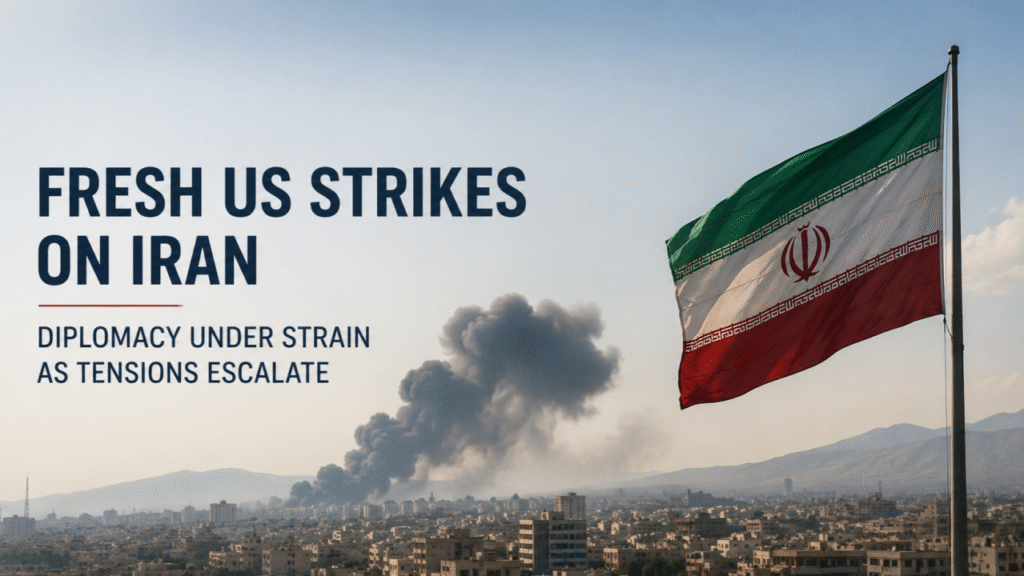
Tensions between the United States and Iran have intensified once again after the U.S. launched a fresh wave of military strikes targeting dozens of Iranian military assets. According to U.S. Central Command (CENTCOM), the operation focused on missile launch sites, drone infrastructure, radar systems, and other military facilities that Washington says were being used to threaten international shipping and U.S. forces in the region.
Iran strongly condemned the attacks, stating that the strikes have made diplomacy “meaningless” and significantly reduced the chances of resolving the crisis through negotiations. Iranian officials reported casualties from the attacks and warned that the country would continue to respond to any further military action. Tehran maintains that the U.S. actions violate previous understandings and undermine efforts to restore stability in the region.
The renewed confrontation comes at a particularly sensitive time, as both countries had been engaged in diplomatic discussions aimed at easing tensions over Iran’s nuclear program and ensuring safe navigation through the Strait of Hormuz. However, the latest military exchanges have placed those negotiations under severe strain, raising concerns that the fragile diplomatic framework could collapse entirely.
The Strait of Hormuz remains at the center of the conflict due to its critical importance to global energy trade. Nearly one-fifth of the world’s seaborne oil passes through this narrow waterway, making any disruption a major concern for international markets. Continued hostilities could increase shipping risks, elevate insurance costs, delay cargo movements, and contribute to higher global energy prices.
The escalating conflict has also prompted renewed calls from the international community for restraint and dialogue. Several countries and international organizations have urged both Washington and Tehran to avoid further escalation and return to diplomatic negotiations, warning that prolonged military action could destabilize the broader Middle East and negatively impact global trade and economic recovery.
For businesses involved in international trade, especially those dependent on Middle Eastern shipping routes, developments in the region require close monitoring. Rising geopolitical tensions around key maritime corridors can directly affect freight rates, transit schedules, supply chain reliability, and commodity prices across global markets.
At Globriddge International Private Limited, we closely monitor global trade developments and geopolitical events that influence international commerce. By providing timely market insights and reliable export solutions, we help businesses navigate changing global trade conditions with confidence and ensure smoother international supply chains.
#GlobalTrade #Geopolitics #MiddleEast #Iran #UnitedStates #InternationalTrade #SupplyChain #Logistics #MaritimeTrade #StraitOfHormuz #ExportImport #GlobalBusiness #TradeNews #RiskManagement #GlobriddgeInternational

Leave a Reply